Indonesia offers superyacht owners something increasingly rare: thousands of kilometres of cruising ground with genuinely remote anchorages, a long usable season, and world-class diving within a few days’ steaming of major airports. The constraints are equally real — cabotage limits on foreign-flagged commercial charter, uneven shore infrastructure, and fiscal decisions that reward planning and punish improvisation.
The cruising proposition
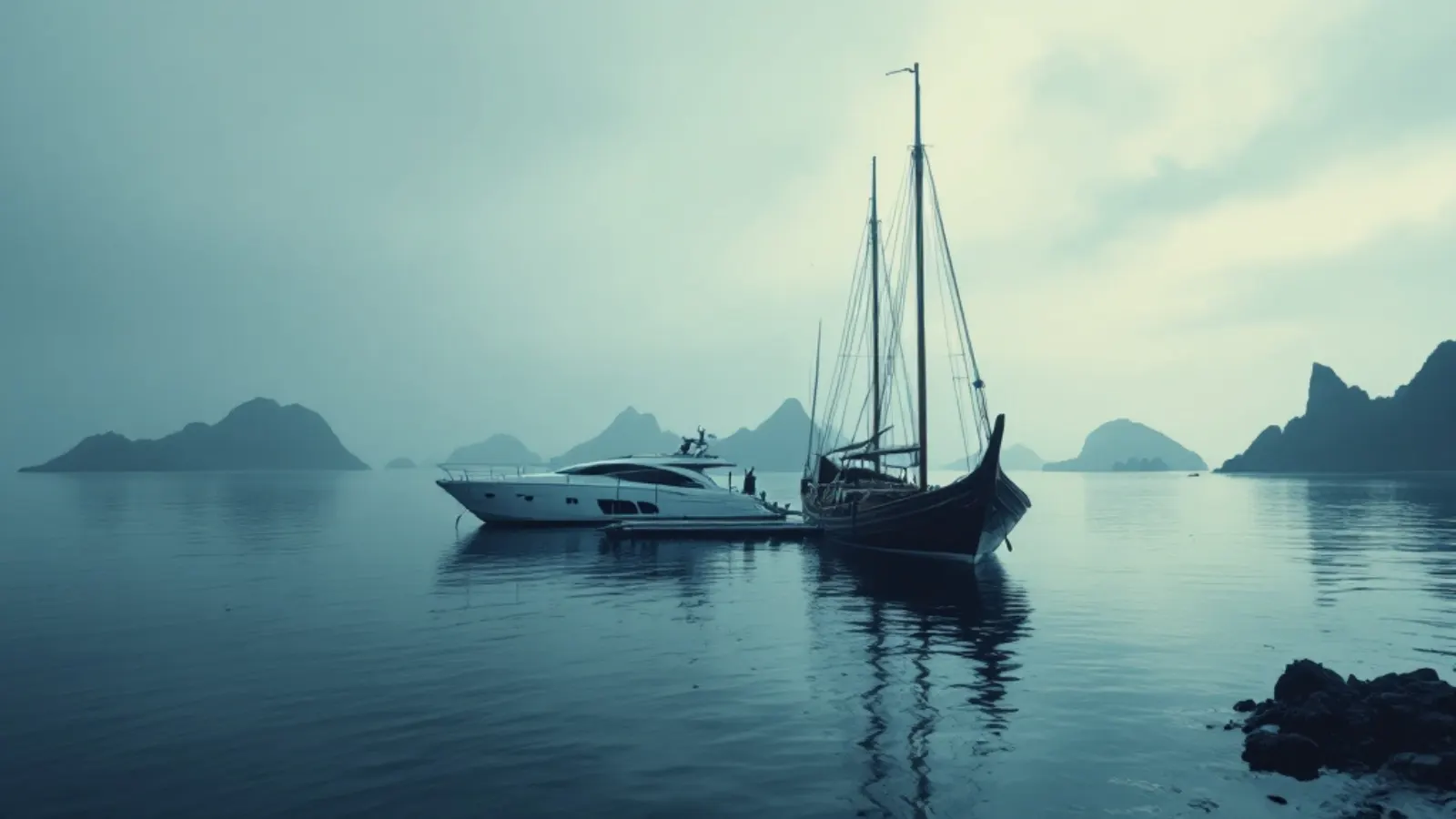
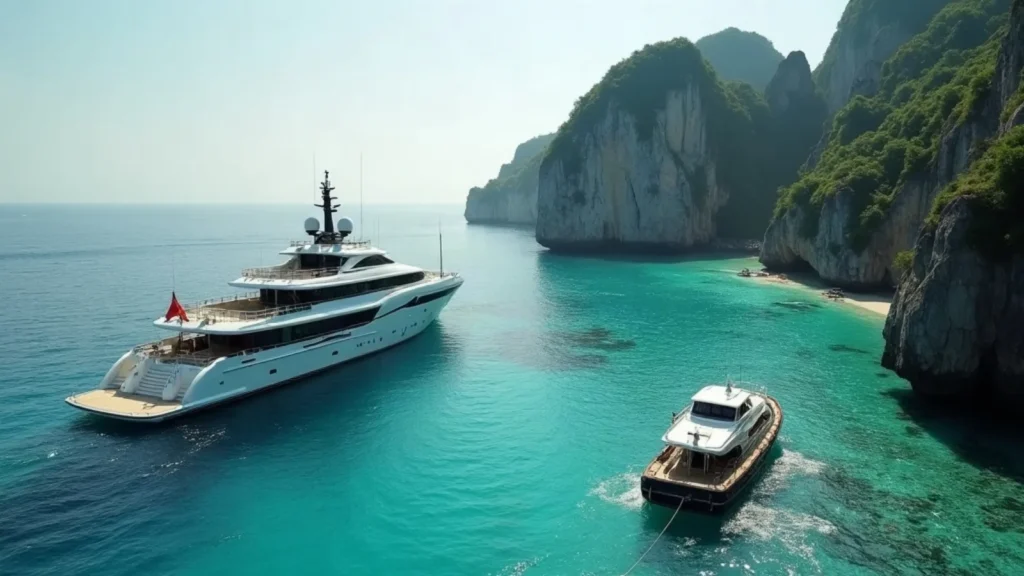
The archipelago spans a distance comparable to the width of the continental United States, and the sailing between its regions is the point rather than the transit. Komodo and the wider Flores Sea deliver dramatic topography and reliable marine life. Raja Ampat is among the most biodiverse reef systems documented anywhere. The Banda Sea offers open-water passages and volcanic islands with almost no other traffic. Between them sit hundreds of anchorages that receive a handful of visiting yachts a year.
For owners who have already cruised the Mediterranean and Caribbean, that scarcity is the attraction. It is also the operational challenge.
Season and routing
Indonesia sits across the equator, so conditions vary by region and monsoon rather than by a single national season. Eastern cruising grounds and western ones peak at different times, which in practice lets a well-planned itinerary keep a vessel in good conditions for a long stretch of the year. Owners should plan routing around monsoon patterns and local knowledge rather than around a fixed calendar imported from another region.
Key facts at a glance
| Cruising grounds | Komodo and Flores Sea, Raja Ampat, Banda Sea, Bali and Lombok, Sulawesi |
|---|---|
| Season | Varies by region and monsoon; eastern and western grounds peak at different times |
| Access | International airports at Bali, Jakarta, Labuan Bajo, Sorong and Makassar |
| Commercial charter | Requires Indonesian flag and Indonesian-entity ownership under cabotage |
| Private cruising | Foreign flag permitted under clearance and cruising-permit conditions |
| Shore support | Concentrated around Bali and Labuan Bajo; thinner further east |
The constraint owners underestimate: charter rights
Owners arriving from the Mediterranean often assume a superyacht can offset costs through charter wherever it cruises. Indonesian cabotage rules reserve domestic commercial carriage of passengers to Indonesian-flagged, Indonesian-owned vessels, with narrow exemptions. A foreign-flagged yacht may cruise privately under the applicable clearance and permit regime, but selling charter weeks between Indonesian ports is a different legal universe.
Owners who want revenue in Indonesian waters normally hold the vessel through an Indonesian entity and register locally, with the licensing that goes with the intended class of operation. The analysis is set out on foreign ownership and cabotage.
The second constraint: fiscal position
Permanent importation of a vessel into Indonesia generally attracts import duty, VAT and other applicable levies on a customs value. Temporary regimes exist for visiting foreign-flagged yachts and can relieve or suspend those charges while conditions on duration and use are met. Neither route is wrong; what is wrong is discovering which one applies after the vessel arrives. See yacht import duty and tax.
Shore infrastructure, honestly described
Berthing, technical support, provisioning and qualified crew concentrate around Bali and, to a growing extent, Labuan Bajo. East of that, support thins quickly. A vessel operating in Raja Ampat or the Banda Sea should carry spares, competent engineering capability and realistic planning assumptions, because a part that arrives next day in Palma may take considerably longer to reach a remote anchorage. This is a planning problem rather than a barrier, but it should be priced into the operating budget from the start.
What this means for acquisition
Three practical consequences. First, vessels with genuine range, tender capacity and self-sufficiency are worth a premium here that they might not command in a marina-dense region. Second, hulls already correctly flagged and fiscally settled in Indonesia carry a real advantage for owners intending local operation — a factor that belongs in every valuation. Third, the ownership structure should be decided before the purchase contract names a buyer, not afterwards. The full sequence sits in our buyer’s guide.
The outlook
Indonesia’s superyacht profile has grown steadily as marina capacity has improved around Bali and Labuan Bajo and as remote cruising has become more sought-after. Owners who plan flag, fiscal position and shore support properly find an extraordinary cruising ground with very little competition for its best anchorages. Owners who treat it as a Mediterranean season with warmer water find friction at every checkpoint.
Who you are contracting with. Indonesia Yacht Broker is a specialist maritime brand under Juara Holding Group. Brokerage, central agency, sales representation, and charter-marketing mandates on this site are issued by PT Komodo Bahari Nusantara. Where a transaction moves into construction, repair, or refit, the contract is issued by PT Komodo Galangan Nusantara; where it moves into technical or commercial vessel management, the contract is issued by PT Komodo Vessel Management. Separate contracts, separate fees, separate ledgers.
Frequently asked questions
Can I charter my superyacht in Indonesia to offset costs?
Not under a foreign flag for domestic commercial carriage. Revenue operations normally require an Indonesian-flagged vessel held by an Indonesian entity with the appropriate licences.
How long can a foreign-flagged yacht stay in Indonesia?
Duration is governed by the temporary regime and cruising permissions applicable at the time, with conditions that must be maintained continuously. Plan it with an agent rather than assuming.
Where is the best shore support?
Bali carries the deepest technical and provisioning support, with Labuan Bajo growing. Further east, self-sufficiency matters more than proximity to a yard.
Is Indonesia suitable for year-round operation?
Regions peak at different times because of monsoon patterns, so a well-routed itinerary can keep a vessel in favourable conditions for much of the year.
Discuss an Indonesian acquisition. Send the vessel particulars, the flag it currently sits under, and your target timeline. We reply with a written scope, not a brochure.
WhatsApp +62 811 3941 4563 bd@juaraholding.com
All figures quoted in USD. We do not publish promotional or clearance-style pricing — brokerage is a fiduciary service, not a retail one.
Part of Juara Holding Group.
Construction, repair, refit, and vessel-sale contracts are issued by PT Komodo Galangan Nusantara.
Boat-management contracts are issued by PT Komodo Vessel Management.
Brokerage, central agency, charter marketing, and commercial representation contracts are issued by PT Komodo Bahari Nusantara.
Separate contracts. Separate fees. Separate ledgers. One integrated maritime ecosystem.