
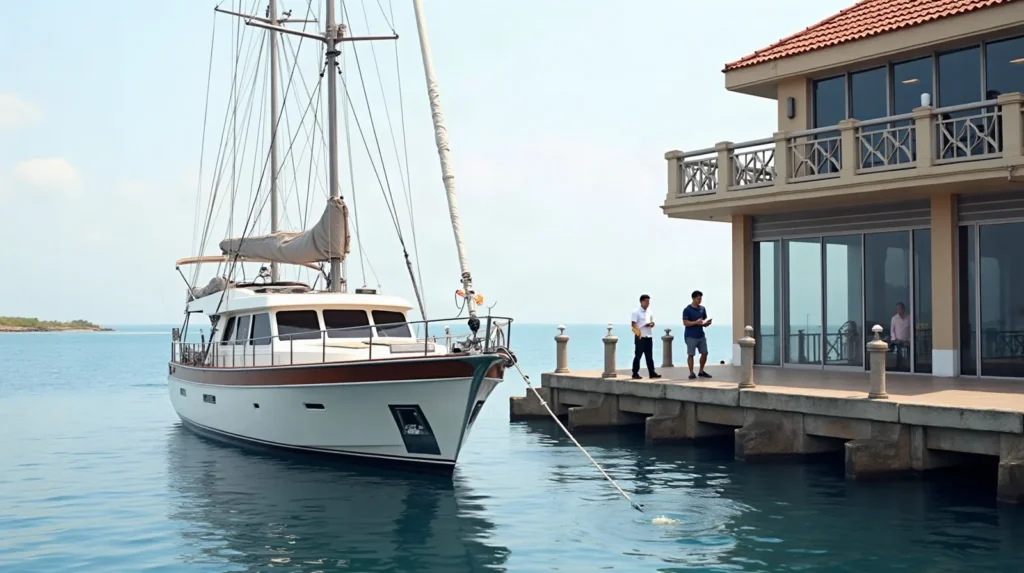
Foreign yacht ownership in Indonesia works on three separate rules: a foreign-flagged yacht may stay and cruise privately under temporary-import arrangements (limited years, designated ports, no commercial use); the Indonesian ship registry is essentially open to Indonesian citizens and Indonesian legal entities, so foreigners register through a PT or PT PMA structure; and cabotage reserves domestic commercial operation — including charter — for Indonesian-flagged vessels under Indonesian control. Confusing the three rules is where expensive mistakes start.
The three-rule framework
Ask “can a foreigner own a yacht in Indonesia” and you are really asking three questions: can the boat be here, can it be registered here, and can it earn money here? Each has a different answer, a different legal basis, and a different cost profile. This article walks the three rules in order; the desk’s money-page treatment — with the structuring service attached — is at foreign ownership and cabotage.
Rule 1: presence — temporary import for visiting yachts
A foreign-registered yacht owned by a foreign national can enter Indonesia under temporary-import facilities: entry and exit through designated ports, a limited period (commonly understood up to around three years), and exemption from import duty for as long as the status remains genuinely temporary. What the status does not allow: selling the vessel into Indonesian ownership without formal importation, or operating commercially. Overstaying or breaching the facility’s conditions converts a free arrangement into a serious fiscal liability — so track the clock, and verify current customs practice through a licensed customs broker (PPJK) rather than marina hearsay.
Rule 2: registry — the PT and PT PMA route
The Indonesian registry (Grosse Akta for larger tonnage, Pas Besar and Pas Kecil by size) is essentially for Indonesian citizens and Indonesian legal entities. The established route for a foreign owner who wants the Indonesian flag is a corporate structure: a local PT or a foreign-investment PT PMA whose licensed business lines fit the vessel’s intended use. The structure decision drives everything downstream — tax exposure, what the boat may do, financing, and eventual resale — which is why it belongs before the offer, not after. The registration mechanics are on Indonesian flag registration, and the full flag-change sequence for an imported vessel is in changing a vessel to the Indonesian flag.
Rule 3: commerce — cabotage
The cabotage principle reserves domestic sea commerce for Indonesian-flagged vessels controlled by Indonesian entities. In the yacht world this bites hardest on charter: selling passenger experiences between Indonesian ports is domestic commerce, which is why the legal charter fleets of Labuan Bajo, Raja Ampat and Bali run Indonesian flags under PT structures. A visiting foreign yacht may cruise privately; the moment it starts earning domestically without the right structure, it is operating outside the rules — with fiscal consequences that can include losing the temporary-import position. Tourism-business use also connects to tax: genuine tourism operation is one of the conditional exemption grounds in the luxury-tax (PPnBM) analysis, covered in the import duty and tax guide.
Putting it together: four common owner profiles
| Cruising visitor | Foreign flag + temporary import. Private use only, designated ports, limited years. No Indonesian registry needed. |
|---|---|
| Long-term resident owner | Decide deliberately: renewably temporary, or import + PT structure + Indonesian flag for permanence. |
| Charter investor | PT/PT PMA + Indonesian flag is the lawful route to domestic charter revenue under cabotage. |
| Foreign seller in Indonesian waters | Route choice — export sale, buyer imports, or regularise first — decided before marketing. |
What this means for a purchase
Fix the structure before the offer: it determines the flag, the closing tax stack, and what the vessel may legally do. Then run the transaction on the standard rails — written MOA in USD, escrow-held funds, independent survey, registry transfer — coordinated end to end by the national brokerage desk together with licensed legal, tax and customs advisors. The ownership-transfer mechanics that follow a successful purchase are step-by-step in transferring yacht ownership in Indonesia.
Where owners most often get it wrong
Three recurring mistakes, all avoidable. Mistake one: treating the temporary-import clock as infinitely renewable — it is a bounded facility with conditions, not a permanent status. Mistake two: setting up a PT “for the paperwork” with no real activity, then claiming tourism-business treatment; structures without substance fail exactly when you need them. Mistake three: buying first and structuring later, which usually means paying for one transaction and then paying again to restructure it. The pattern behind all three is the same: the rules reward owners who decide what the boat is for before they decide which boat — and penalise improvisation after the fact.
Planning ownership as a foreign buyer? Send your intended use and holding preference; the desk replies with a written structure–flag–tax map to review with your advisors.
WhatsApp +62 811 3941 4563 bd@juaraholding.com
Orientation map, not legal advice. Final structures are built with licensed legal and tax counsel; market figures quoted in USD.
Frequently asked questions
Can a foreigner personally hold an Indonesian-flagged yacht?
The registry is essentially for Indonesian citizens and legal entities; the established foreign route is ownership through a PT or PT PMA. Personal foreign title generally means keeping a foreign flag under temporary import instead.
How long can my foreign-flagged yacht stay in Indonesia?
Temporary-import facilities run for a limited period — commonly understood up to around three years — subject to designated ports and the status staying genuinely temporary. Verify the current rules through a licensed customs broker before relying on them.
Can I charter out my foreign-flagged yacht occasionally?
Domestic charter is domestic commerce, which cabotage reserves for Indonesian-flagged vessels under Indonesian entities. “Occasional” does not create an exception — commercial use requires the right structure.
Does buying through a PT PMA change the taxes I pay?
The structure changes the analysis: importation duties and VAT follow the import event, while PPnBM exemption grounds — notably genuine tourism-business use — depend on the entity and its licensed activity. Model it with tax counsel before committing.
Who you are contracting with. Indonesia Yacht Broker is a specialist maritime brand under Juara Holding Group. Brokerage mandates and escrow coordination on this site are issued by PT Komodo Bahari Nusantara. The desk coordinates independent escrow holders and never holds client funds itself. Official contact: WhatsApp +62 811 3941 4563 and bd@juaraholding.com.